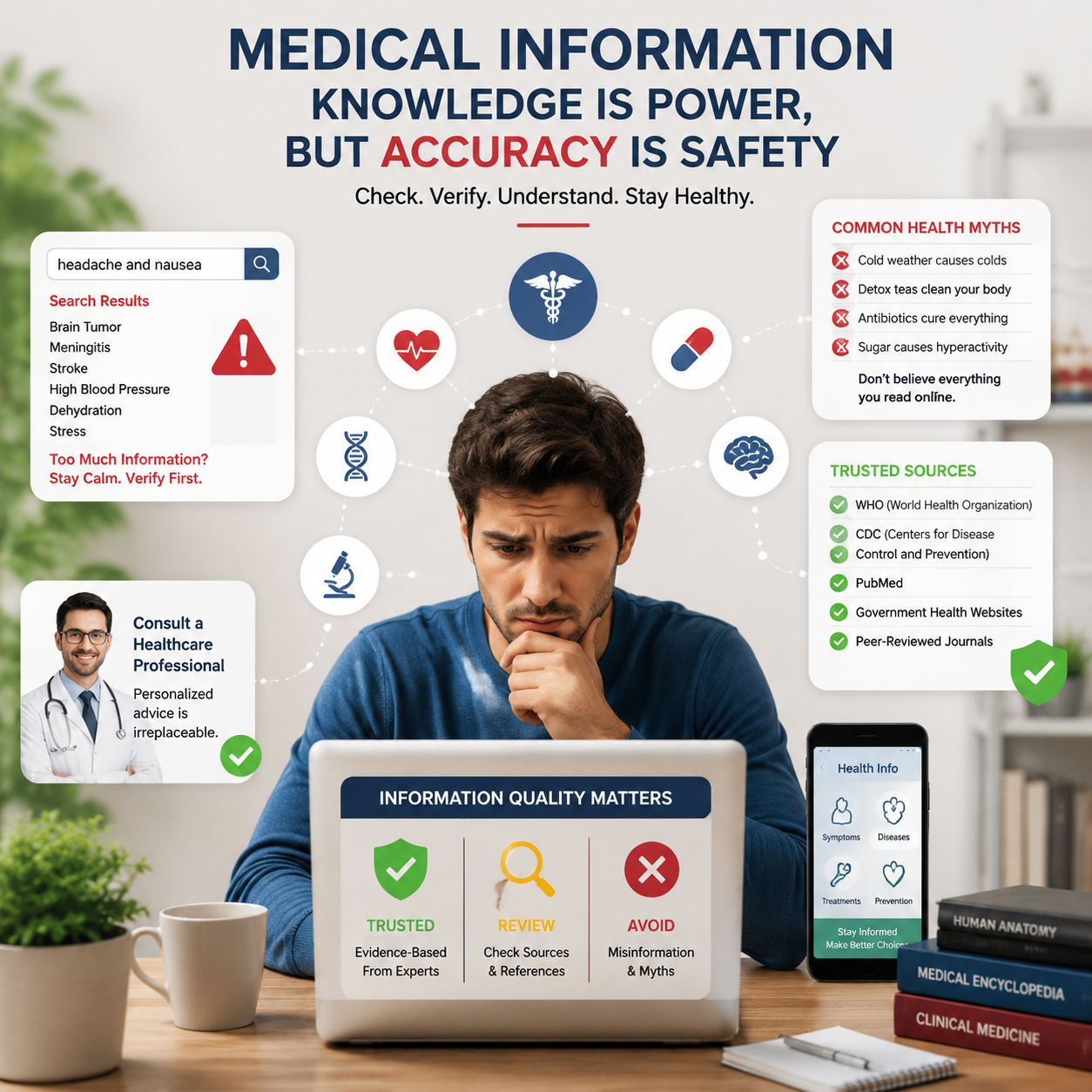
The article Medical Information Mayhem: Why Your Symptoms Google Backfire explores how modern health data spreads, how people interpret it, and why accurate understanding matters more than ever in today’s digital-first world. Medical knowledge is now everywhere—from apps to search engines—but not all of it is reliable or easy to understand. – aptekamedpl
In a world where a simple headache search can lead to alarming diagnoses, knowing how to navigate health content is becoming a survival skill rather than just a convenience.
Introduction to Medical Information in the Digital Era
Medical knowledge used to stay inside hospitals and textbooks. Now it lives on smartphones, social media, and AI-powered tools. This shift has made healthcare more accessible but also more confusing.
People today interact with digital health ecosystems daily without even realizing it. From wearable fitness trackers to online symptom checkers, the amount of data available is overwhelming.
What is Medical Information?
Medical information refers to structured knowledge about human health, diseases, treatments, diagnostics, and prevention strategies.
Core Components of Health Data
- Clinical records from hospitals
- Research findings from journals
- Public health guidelines
- Patient-generated data from apps and devices
Scientific Nature of Health Knowledge
Medical content often includes biomedical terminology, epidemiological data, and clinical trial outcomes that require careful interpretation.
Who Uses Medical Information?
Patients and Everyday Users
People search for symptoms, medications, and treatment options.
Healthcare Professionals
Doctors, nurses, and specialists use it for diagnosis and treatment planning.
Researchers and Scientists
They rely on structured datasets to study diseases and develop new therapies.
In short, medical data is shared across multiple layers of society, each with different levels of understanding and responsibility.
Where Medical Information is Found
Trusted Sources
- Hospitals and clinics
- Peer-reviewed journals like The Lancet
- Government health organizations
Digital Platforms
- Health apps
- Online encyclopedias
- AI-driven diagnostic tools
Informal Sources
Social media posts and forums—often unverified and risky.
When You Should Rely on Medical Information
Timing matters when using health data. Not every symptom requires deep online research.
Situational Awareness
- Mild symptoms: general reading is fine
- Persistent symptoms: consult professionals
- Emergency symptoms: immediate medical attention required
Understanding when to trust information can prevent unnecessary panic or delayed treatment.
Why Accuracy Matters in Health Data
Incorrect health data can lead to serious consequences, including self-diagnosis errors and delayed treatment.
Key Risks
- Misinterpretation of symptoms
- Overuse of medication
- Anxiety from incorrect self-diagnosis
In medical science, even a small error in interpretation can lead to major health risks, especially when dealing with complex conditions like cardiovascular disorders or neurological diseases.
How Medical Information is Collected and Verified
Data Collection Process
Medical data is gathered through:
- Clinical trials
- Patient records
- Epidemiological surveys
Verification Systems
Before publication, information passes through:
- Peer review processes
- Ethical committees
- Statistical validation models
This ensures that findings are scientifically valid and reproducible.
Risks of Misinformation in Healthcare
Misinformation spreads faster than verified medical data in many online spaces.
Common Causes
- Viral health myths
- Misleading headlines
- Lack of scientific literacy
Real-World Impact
False health claims can lead to people avoiding vaccines, misusing medications, or ignoring serious symptoms.
Role of Technology and AI in Medical Data
Modern healthcare increasingly depends on artificial intelligence and data science.
AI in Healthcare
Tools using machine learning algorithms help detect patterns in medical imaging and patient data.
Wearable Technology
Devices track heart rate, sleep patterns, and oxygen levels in real time.
Big Data in Medicine
Large datasets allow researchers to predict disease outbreaks and improve treatment accuracy.
Practical Tips for Understanding Health Content
Interpreting health data requires critical thinking and awareness of scientific context.
One important step is recognizing reliable terminology and separating opinion from evidence. Always check if the source is backed by clinical research or recognized institutions.
When reviewing health content, the importance of Medical Information cannot be overstated. It acts as the foundation for understanding symptoms, treatments, and prevention strategies. Without it, decision-making becomes guesswork rather than informed action.
Simple Evaluation Checklist
- Is the source medically verified?
- Does it reference scientific studies?
- Is the information updated?
Future of Medical Information Systems
The future of healthcare data is moving toward integration and personalization.
Emerging Trends
- AI-driven diagnostics
- Personalized medicine based on genetics
- Blockchain for secure health records
Scientific Innovation
Fields like bioinformatics and computational biology are reshaping how diseases are understood and treated.
This evolution will make medical systems faster, smarter, and more patient-centered.
Medical knowledge is no longer confined to experts—it is part of everyday digital life. From apps to search engines, people are constantly exposed to health-related content that can shape decisions, behaviors, and even emotional responses.
Understanding how to filter, interpret, and apply reliable data is essential in a world full of information overload. At its core, Medical Information Mayhem: Why Your Symptoms Google Backfire highlights the importance of balance between curiosity and caution when dealing with health knowledge.